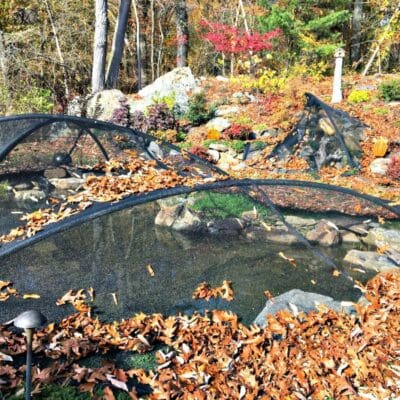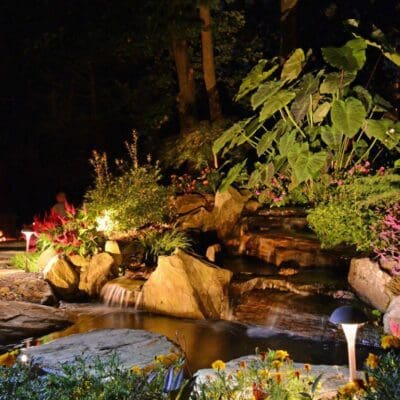
Net it. Forget it. Enjoy fall.
The leaves look great on the trees. In your pond, not so much. Leaves that sink to the bottom break down over the winter into muck, which feeds algae and uses up the oxygen your fish need.
A little work in fall saves a lot of cleanup in spring. Here’s the 10-step checklist our team follows.
Clean pond. Happy fish. Happy fall.
Why does fall matter so much? A pond is a living system. In summer, plants, fish and beneficial bacteria keep each other in balance. In fall, that balance shifts. Water cools, bacteria slow down, fish eat less and plants die back, right as a pile of leaves lands on top of it all.
If that organic matter sits on the bottom all winter, it breaks down into ammonia and sludge. By spring you’re looking at green water, algae blooms, clogged filters and stressed fish. A pond that’s cleaned and put to bed properly in fall wakes up clear and healthy.
What you’ll need
- Pond netting sized a few feet wider than your pond
- 2-inch PVC pipe and stakes to hold the net up and in place
- A long-handled skimmer net
- Pruners or garden shears for trimming plants
- A bucket of pond water for rinsing filter media
- Cold-water fish food and cold-water beneficial bacteria
- A floating de-icer or an aerator
- A pond thermometer, so you know when to change feeding
Freddy’s 10-Step Fall Pond Checklist
- Net it early. Put your net on before the leaves start falling, not after. Support it with 2-inch PVC pipe so it doesn’t sag into the water, and stake down the edges. See our step-by-step guide on how to net your pond for fall.
- Skim what gets through. Empty skimmer baskets and scoop out floating leaves every few days while the trees are dropping.
- Clear the bottom. Take out sunken leaves and debris before they turn into sludge over the winter.
- Trim back plants. Cut hardy water lilies and edge plants down to a few inches above the crown. Pull out invasive plants like water celery now so they don’t take over in spring. Bring tropical plants inside or compost them before the first frost.
- Sink hardy lilies and lotus. Move their pots to the deepest part of the pond, below where ice will form.
- Change up fish feeding. When the water drops to around 50–60°F, switch to a cold-water wheat-germ food. Below about 50°F, stop feeding. Fish can’t digest food well in cold water. More in our guide to feeding koi fish.
- Add cold-water bacteria. Use a beneficial bacteria made for cool water so it keeps breaking down debris as temperatures fall.
- Clean the filters. Rinse filter media in pond water, not tap water, so you keep the good bacteria. Check the pump for clogs.
- Make a winter plan for your equipment. Decide whether your pump and waterfall keep running or shut down. Remove and store the UV clarifier, ion generator and any pump that won’t run through winter. Here’s how to winterize your pond pump.
- Keep a hole in the ice. A floating de-icer or an aerator lets harmful gases escape and oxygen get in. Never smash the ice, because the shock stresses your fish. Learn how to install a pond aerator.
Bonus tip: Take the net off once the leaves are done and before the first heavy snow. Snow can pull a net right into the pond.
Printable checklist
- Net installed and staked
- Skimmer baskets emptied
- Bottom debris removed
- Plants trimmed, invasives pulled, tropicals removed
- Hardy lilies and lotus lowered
- Switched to cold-water food, or stopped feeding
- Cold-water bacteria added
- Filters rinsed in pond water
- UV, ion generator and pumps stored, or winter run plan set
- De-icer or aerator installed
- Net removed before heavy snow
Your fall pond timeline for Chester County
- Mid to late September: Put the net on. Start switching fish food as the water cools toward 60°F. Trim back plants that are starting to yellow.
- October: Leaf drop peaks. Skim often, empty skimmer baskets and clean out the bottom. Add cold-water bacteria. Bring tropical plants inside before the first frost.
- Late October to November: Stop feeding once the water stays below about 50°F. Lower hardy lilies and lotus. Clean the filters and store the UV clarifier and ion generator.
- Late November to early December: Take the net off once the leaves are done. Put in your de-icer or aerator before the first hard freeze. Shut down the pump, or set it up to run through winter.
Common fall pond mistakes
Waiting too long to net. Once leaves are in the water, they start to sink within days. Netting after the leaves fall means you’re already cleaning up.
Leaving the net on all winter. Heavy snow can pull a net into the pond and damage the edges and plants. Take it off once the leaves are done.
Feeding fish in cold water. Fish slow way down in cold water and can’t digest food well. Uneaten food also rots and fouls the water.
Rinsing filters with tap water. Chlorine in tap water kills the beneficial bacteria your filter depends on. Always rinse media in a bucket of pond water.
Smashing the ice. Hitting the ice sends shock waves through the water that can stress or even harm your fish. Use a de-icer or aerator to keep a hole open, or melt one gently with a pot of warm water.
Cutting plants too short or too early. Leave a few inches above the crown so the plant can come back strong in spring.
Closing your pool too?
If you’ve got a pool as well as a pond, fall is the time to close it down for the season. That means balancing the water, lowering the water level, blowing out the lines, winterizing equipment and putting on the cover. Our team handles both pond and pool fall service, so you can check them both off in one call. See our pool maintenance packages.
Fall pond FAQ
When should I net my pond in Pennsylvania?
In southeastern PA, most trees start dropping leaves in early to mid-October. Get your net on by late September or the first week of October to stay ahead of them.
Should I run my pond pump through the winter?
It depends on your pond. Some ponds do well with the pump running all winter. Others are better off shut down, with an aerator keeping a hole in the ice. Streams and waterfalls can form ice dams that pull water out of the pond. Ask us what’s right for yours.
When should I stop feeding my fish?
Between about 50 and 60°F, feed less often and when the temperature reaches below 50°F stop feeding. This helps the fish get ready to hibernate.
Do fish survive the winter in a Pennsylvania pond?
Yes, as long as the pond is deep enough, usually at least 2 feet, and a hole stays open in the ice so gases can escape. Koi and goldfish rest near the bottom, where the water stays warmest.
Can I do fall pond maintenance myself?
Absolutely. This checklist covers the basics. For bigger ponds, lots of trees overhead or tricky equipment, a professional cleanout saves time and protects your investment.
Planting around your pond this fall?
Fall is also the best time to plant. See our top 11 fall plantings for southeastern PA, including natives that thrive at the water’s edge.
Let Team Turpin handle it
Don’t want to do it yourself? Our crews net, trim, clean and winterize ponds across Chester County every fall. Check out our pond maintenance packages.
Get on our fall maintenance schedule before the leaves start flying. Call 610.380.1119 or schedule online.